







Bursa Raf · Planning Guide
How to Plan a Special Shelving System for a Workplace in Bursa?
The parcels arriving in the morning are waiting by the door, the best-selling product remains in the back corner, employees browse several shelves to find the same material. In such a workplace, the problem is not always that the space is small. Sometimes the available space is not arranged appropriately for the work being done.
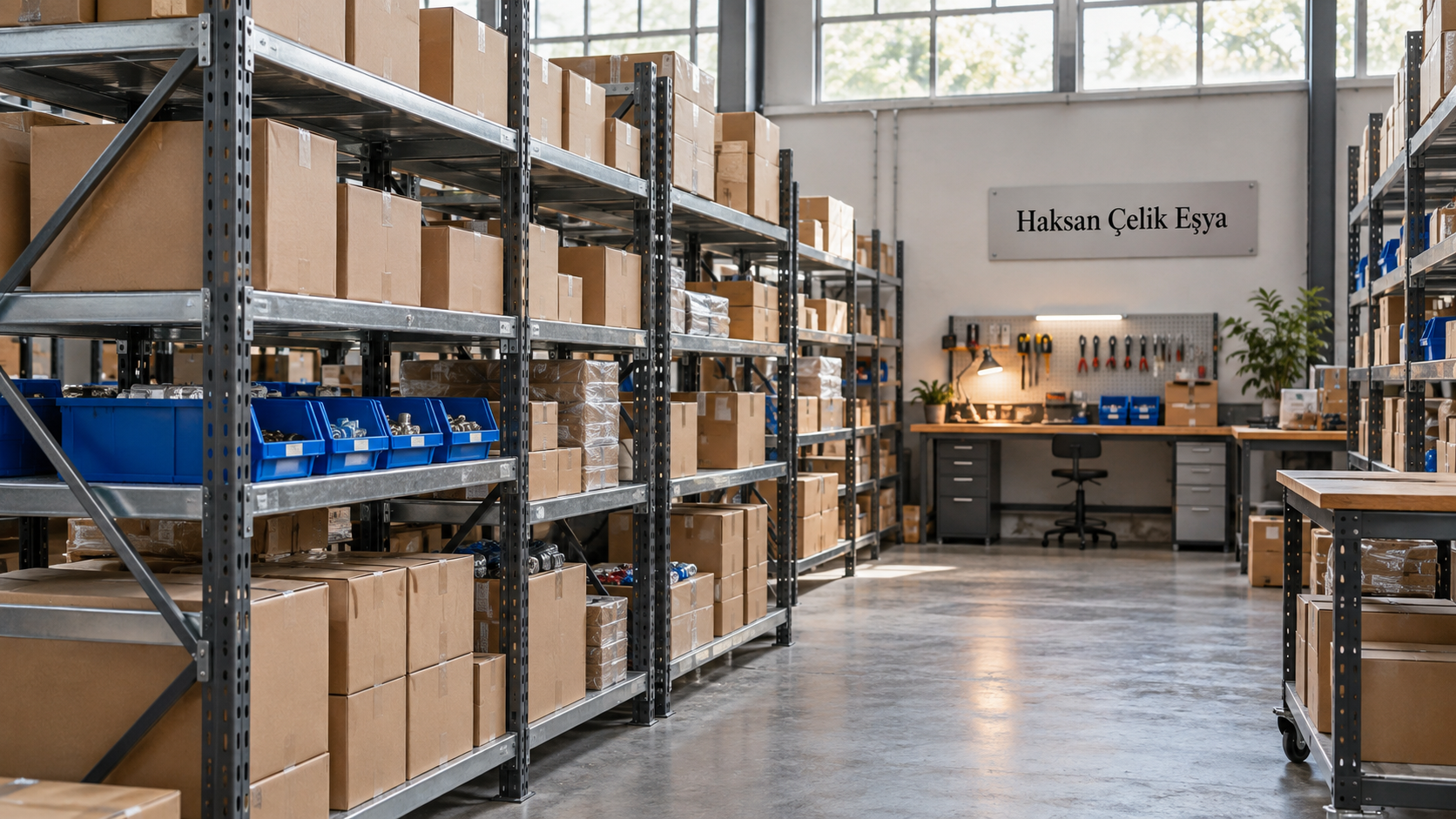
Planning a special shelving system for a workplace in Bursa requires more than placing shelves on empty walls. Which product will be placed where, by whom it will be picked up and how many times it will be carried during the day should be considered together. Correct placement increases storage capacity and makes daily tasks easier. For this reason, your first question is "How many shelves should we buy?" instead of “How are things progressing in this area?” It should be.
The needs of a spare parts store and a textile warehouse are not the same. Similarly, a store where customers choose products and an archive area used only by staff require different solutions. When choosing between Bursa shelving systems, the starting point should not be the model or color, but the way the business works.
Observe the Daily Flow of the Workplace First
Visualise a working day before the shelf layout is drawn. Which door do the products come from? Where is the received material checked? At what point are orders prepared? Are there transitions that cause staff to return frequently? The answers to these questions show whether a plan that looks neat on paper will actually work in the field.
For example, consider a textile business that works on order in Bursa. If the packing table is near the entrance and the most shipped items are at the other end of the warehouse, the employee walks unnecessary distance with each order. Positioning these products closer to the prep area can be more beneficial than simply adding new shelving. It is necessary to first understand the movement and then set up the layout accordingly.
Don't Just Look at the Wall Length When Taking Measurements
It is easy to measure the length of a wall and order a shelf suitable for that measurement. The main thing is that the space remains usable after installation. Columns, door opening directions, window fronts, installation transitions and floor differences should be recorded in the plan. The space required by the person working in front of it or the carrying equipment is as important as the depth of the shelf itself.
Raising the shelves to the highest possible level just because the ceiling height is high does not yield correct results in every business. How to access upper levels, which products will be kept there, and how often the products will be purchased must be determined from the beginning. Although unusable upper floors may appear as a capacity increase in the drawing, they do not provide the expected benefit in daily operation.
Choose the Shelf According to Your Product, Do Not Make the Product Fit on the Shelf
Two boxes of the same size may not weigh the same. Therefore, when choosing a shelf, it is not enough to just know the product size. It should be clarified how many products will be on a floor, how the total load will be distributed, and whether the products will be handled by hand or with equipment. Bearing capacity cannot be determined by appearance or the thickness of the material; It should be evaluated based on the technical information of the selected system.
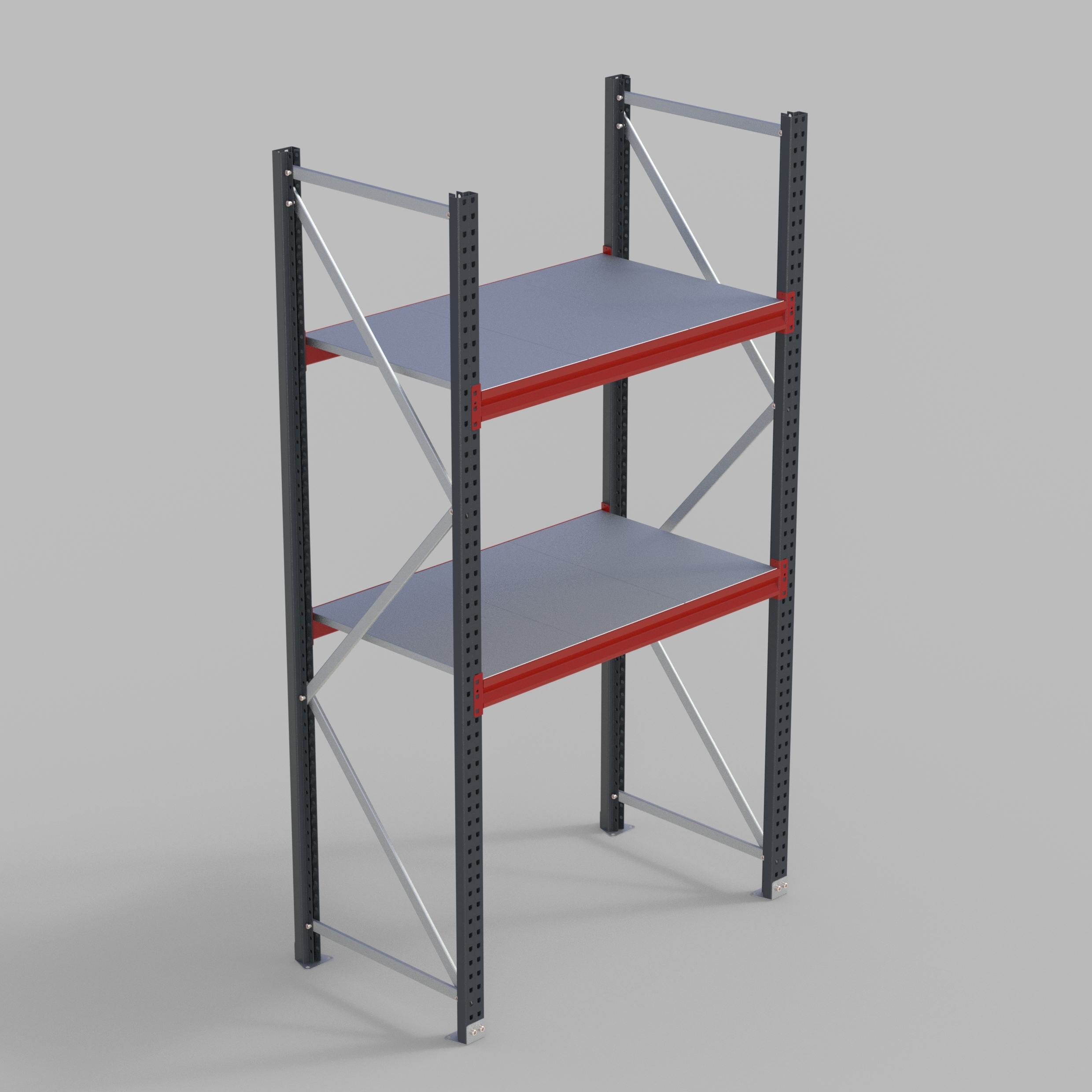
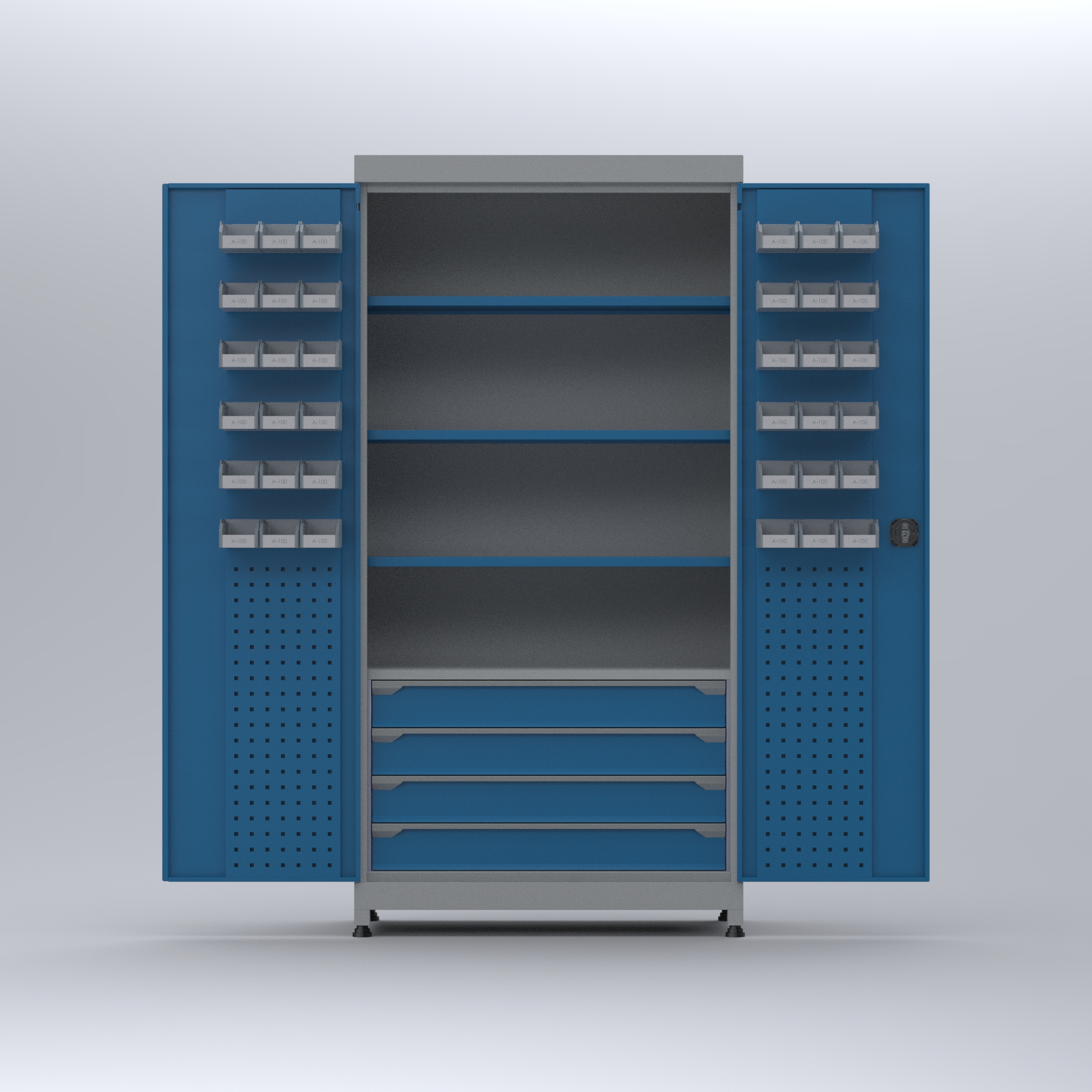
Shelves that can be used with compartmented boxes for small connection parts can make things easier. It is important to adjust the shelf spacing for packaged products. In palletized stock, pallet size, load characteristics and transport equipment used are considered together. In the case of long profiles or similar materials, a different carrier arrangement may be required.
| Area of Use | Priority in Planning |
|---|---|
| Store and sales area | Product visibility, customer access and ease of circulation |
| Boxed product warehouse | Box size, shelf floor capacity and order picking order |
| Spare parts and hardware | Separating products, addressing and finding small parts easily |
| Palleted storage | Placement compatible with pallet features, loads and equipment |
| Office and archive | File sizes, access frequency and regularity classification |
Think Store Shelves and Warehouse Shelves Differently
The shelf in the store is the place where the product is presented to the customer. In the warehouse, it is part of the stock order. This distinction seems small, but it changes many decisions, from shelf height to lighting. Product labels should be read in the sales area, the customer should easily find the category he is looking for and should be able to stand comfortably in front of the shelf.
The priority in the warehouse is to buy the right product from the right place. It is important that similar packaged products do not mix with each other, shelves are coded and frequently moved stocks are placed in easily accessible points. Especially in small businesses with both sales and storage, setting boundaries for these two functions can prevent space from redistributing over time.
Don't Fill Every Space with Shelving in a Small Business
When space is limited, the first thought is often to add a new shelf. However, an area that is not reserved for product acceptance, return control or order preparation will quickly overflow into the aisles. Loosing workspace in return for placing a few more shelves can slow down the business throughout the day.
In a narrow shop, placement along the wall can make using the middle space more convenient. In another business, short rows of shelves divided into product groups may be more functional. There is no one-size-fits-all scheme here. When evaluating the plan, it should not be forgotten that some of the areas that appear empty are actually working and circulation areas.
Take Tomorrow's Needs into Account as well as Today's Stock
A workplace-specific shelving system should not be limited to just meeting the current product list. The growth needs of a store experiencing seasonal stock increases are different from those of a supplier whose product range increases regularly. Examining which product groups have expanded and which packaging sizes have changed recently allows one to be prepared without purchasing unnecessary capacity.
Suitability for additional module use, rearrangement of shelf floors and access to parts of the same system later are issues that may be asked at this stage. Determining the expansion direction instead of filling the entire area during the initial installation may offer more flexible use. However, the suitability of subsequent changes to the technical limits of the system should be evaluated separately.
Read the Scope of the Offer When Comparing Bursa Shelf Prices
When collecting bids for Bursa shelf prices, looking only at the total amount can be misleading. Offers cannot be directly compared if the shelf dimensions, number of floors, stated load capacities, surface features, accessories, transport and installation scope are not the same. It is necessary to know which items are included in a price that appears lower.
Whether your business is in Nilüfer, Osmangazi or Yıldırım; Sharing the same list of needs as you prepare for the discovery and installation meeting makes comparison easier. Gather the floor plan, product photos, packaging dimensions and weight information, if applicable. Also clearly state the points where on-site measurements need to be taken. Thus, the conversation turns from a general price question to an evaluation of the solution suitable for your business.
Things to Check Last Before Installation
Once the layout plan is completed, it is useful to review it with the employees who carry out the daily work. An access issue noticed by the order preparer can easily be overlooked at the desk. Technical evaluations regarding installation and use should be made by the competent team that provides the system.
- Is the route to be followed from product entry to shipment clear?
- Are the frequently used products in easily accessible locations?
- Are the shelf dimensions and capacities clearly stated in the offer?
- Are the doors, necessary passages and working points available?
- Has the labeling and stock addressing scheme determined?
- For future changes. Has a suitable expansion area been considered?
Frequently Asked Questions About Shelf System Planning
Should the shelf be specially produced for the workplace?
No. Job-specific planning does not mean producing every part from scratch. Standard modules can meet the need with appropriate size and placement. Whether special production is required is determined by the physical conditions of the area and the characteristics of the products to be stored.
Can existing shelves be used in the new layout?
It is possible that they can be used; However, their condition, capacity and suitability for the new settlement should be evaluated. It should not be assumed that parts of different systems are compatible. Sharing the technical information of existing shelves makes it easier to determine which sections can be protected.
What information should be prepared to receive a quote?
Approximate dimensions of the area, product types, packaging dimensions, load information and intended use are a good start. If handling equipment is used, this information should also be included. Photos facilitate preliminary discussion; It does not replace the field checks required for a definitive plan.
A Good Shelving Plan Makes the Workday Easier
The difference of the shelving layout suitable for your business is felt when searching for products, preparing orders and placing new goods. Before purchasing more shelves, determine where available space is clogged. When the measurement, product features and daily work flow are evaluated together, a usable layout emerges.
You can start your planning meeting with Bursa Raf by preparing the measurements and product information of your workplace. Thus, you can explain more clearly the shelving needs for your store, warehouse or workshop; You can evaluate the offers based on the same expectations.